Strengthening the weaned piglet: The role of butyrate in gut health and resilience
The weaning period is recognized as one of the most critical and physiologically demanding stages in a piglet’s life. During this transition, piglets are exposed to a series of abrupt and simultaneous dietary, social, and environmental changes, including separation from the sow, mixing with unfamiliar littermates, relocation to a new housing environment, and a shift from highly digestible milk to solid feed.
Collectively, these stressors impose substantial challenges on the immature gastrointestinal tract and developing the immune system. Consequently, feed intake is often reduced after weaning, leading to intestinal villus atrophy, impaired nutrient absorption, and compromised gut barrier function. At the same time, the composition and stability of the intestinal microbiota are disrupted, creating conditions favoring the proliferation of opportunistic and pathogenic bacteria (Rhouma et al., 2017).
20.11.2026
Share this post
✅ Link copied to clipboard!
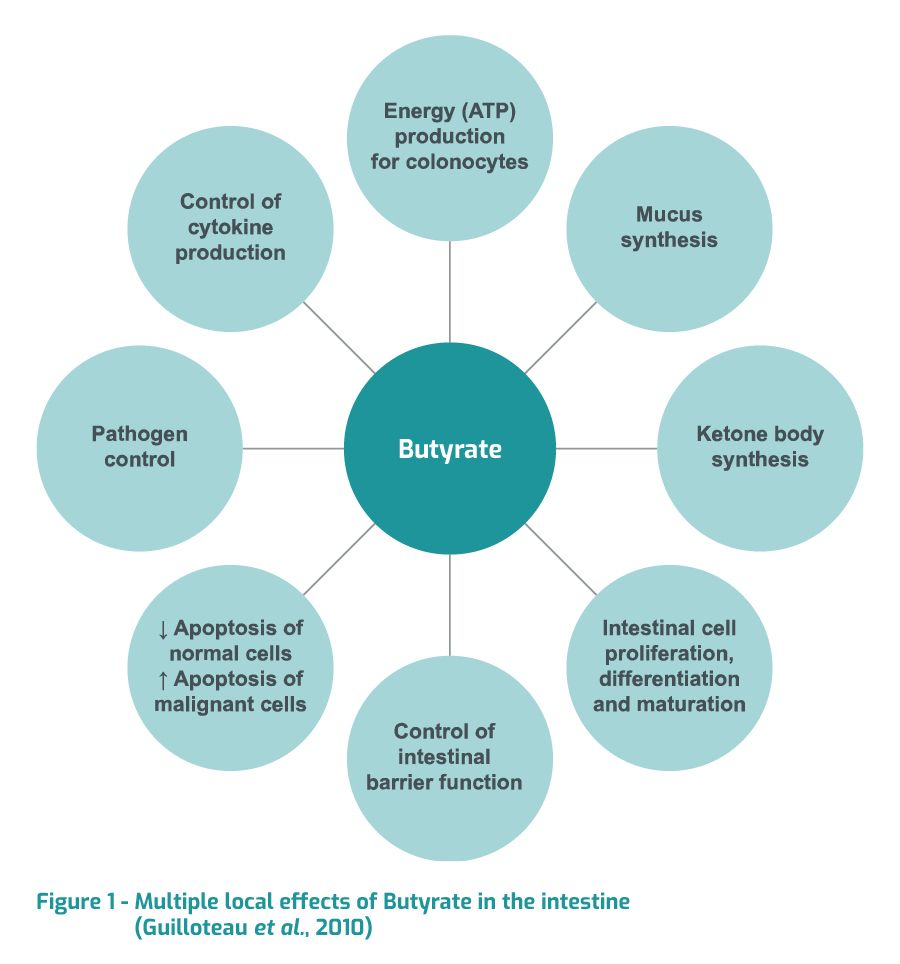
Nutritional strategies that enhance gut health and improve resilience to enteric challenges have attracted considerable interest in swine production, particularly following the restrictions on the use of in-feed antibiotics and zinc oxide. Among the available alternatives, butyrate has emerged as a promising functional feed additive due to its pivotal role as an energy source for intestinal epithelial cells and its broad range of beneficial biological effects.
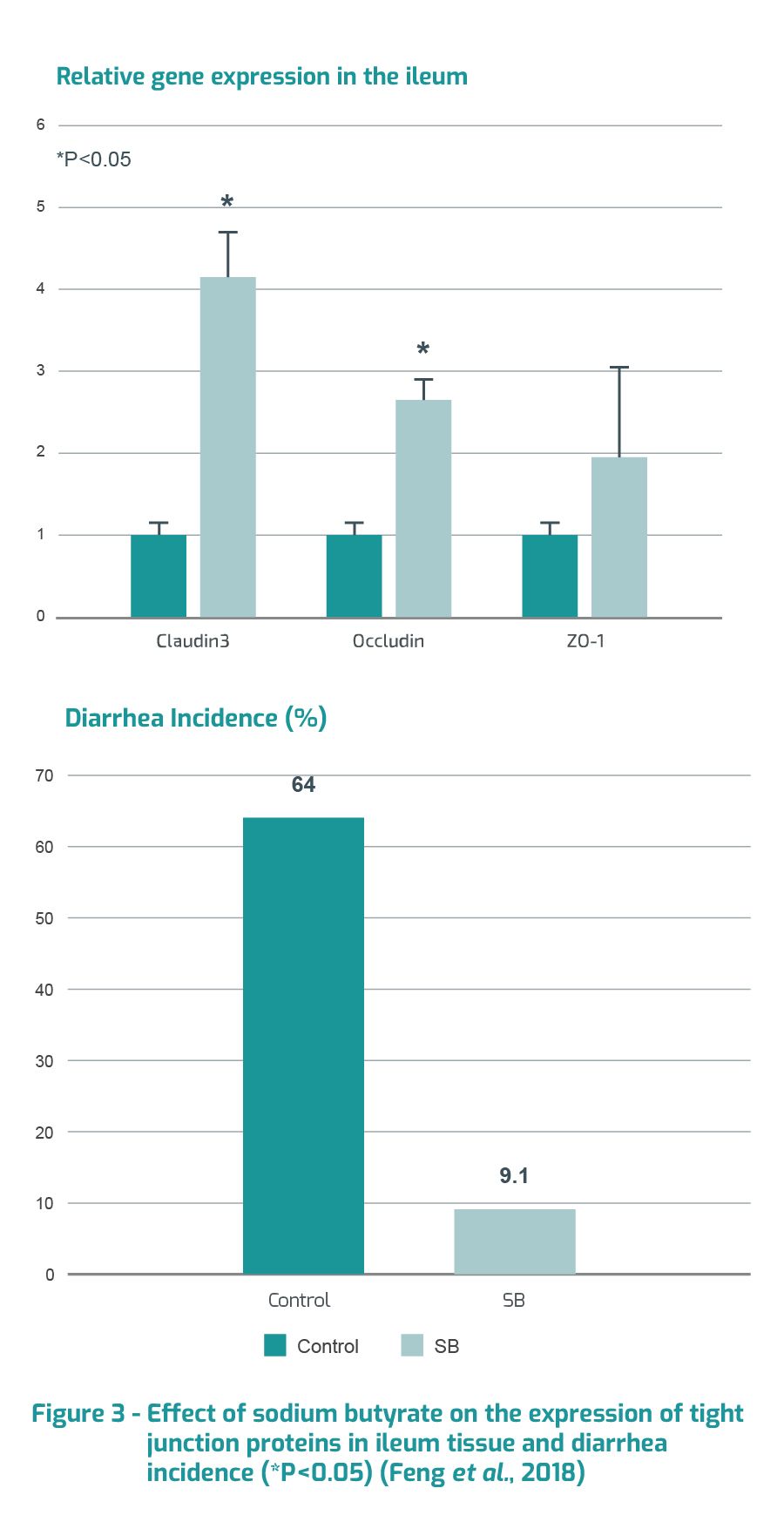
Dietary supplementation with butyrate has been shown to support intestinal morphology by preserving villus integrity, stimulating epithelial cell proliferation, and increasing the expression of tight junction proteins, thereby strengthening the intestinal barrier and reducing gut permeability.
Furthermore, butyrate exerts antimicrobial and immunomodulatory activities that help modulate the gut microbiota, attenuate intestinal inflammation, limit pathogen colonization, and enhance host defense mechanisms against enteric pathogens such as ETEC and Salmonella. Collectively, these effects contribute to improved gut function, reduced susceptibility to PWD, and enhanced post-weaning performance, positioning butyrate as a key nutritional tool for supporting intestinal health in weaned piglets. (Connolly et al., 2025; Guilloteau et al., 2010, Mellouk et al., 2026)
Here we review the positive effects of butyrate in supporting intestinal health in weaned piglets, with a particular focus on its mechanisms of action in preventing post-weaning diarrhea and its potential as a sustainable alternative to traditional antimicrobial interventions.
Butyrate provides critical energy for intestinal cells, directly stimulating the growth of the intestinal villi to optimize nutrient absorption. By strengthening tight junctions and reducing gut inflammation, butyrate improves intestinal barrier function, lowers the incidence of post-weaning diarrhea, increase resistance to bacterial infections and promotes a healthy microbiome.
All together, these positive and protective effects result in improved growth performance and feed efficiency by mitigating the physiological stress of the weaning process.
1. Intestinal epithelial cell energy source
One of the primary functions of butyrate is to serve as a major energy source for intestinal epithelial cells, particularly colonocytes. Adequate availability of butyrate stimulates epithelial cell proliferation and differentiation, promoting intestinal maturation during the stressful post-weaning period.
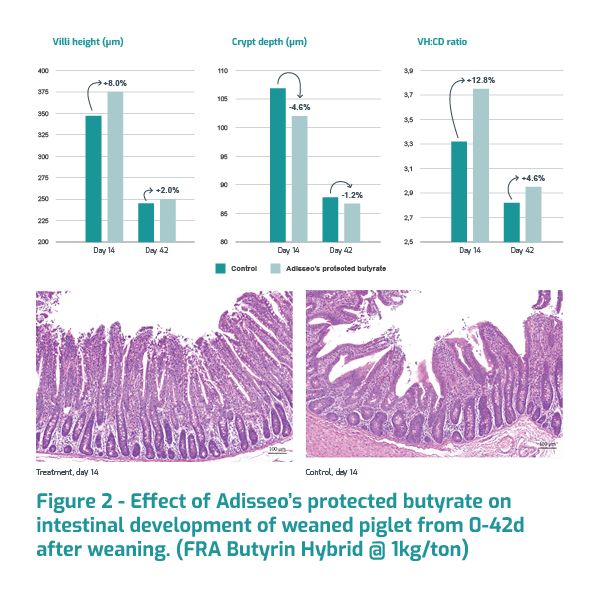
Adisseo has demonstrated that dietary butyrate supplementation increases villus height and improves the villus-height-to-crypt-depth ratio, thereby enhancing the absorptive surface area of the intestine and improving nutrient utilization (Fig. 2). Improved intestinal morphology helps piglets maintain growth performance despite the challenges associated around weaning (Guilloteau et al., 2010).
3. Immune system and anti-inflammatory effects
Butyrate exerts immunomodulatory effects by downregulating pro-inflammatory cytokines (e.g., IL-6, TNF-α) while boosting anti-inflammatory markers (e.g., IL-10). In addition, butyrate supports mucosal immunity by enhancing immunoglobulin production and contributing to immune cell homeostasis.
Through these mechanisms, butyrate helps mitigate weaning-induced inflammation and promotes resilience against enteric disease (Connolly et al., 2025).
4. Increased resilience to bacterial challenges
The effect of the supplementation of butyrate and glycerides of Butyric acid have shown to increase the resistance of pigs to bacterial infections. First, Glycerides of butyric acid show direct antibacterial activity against Gram-negative pathogens like E. coli and Salmonella.
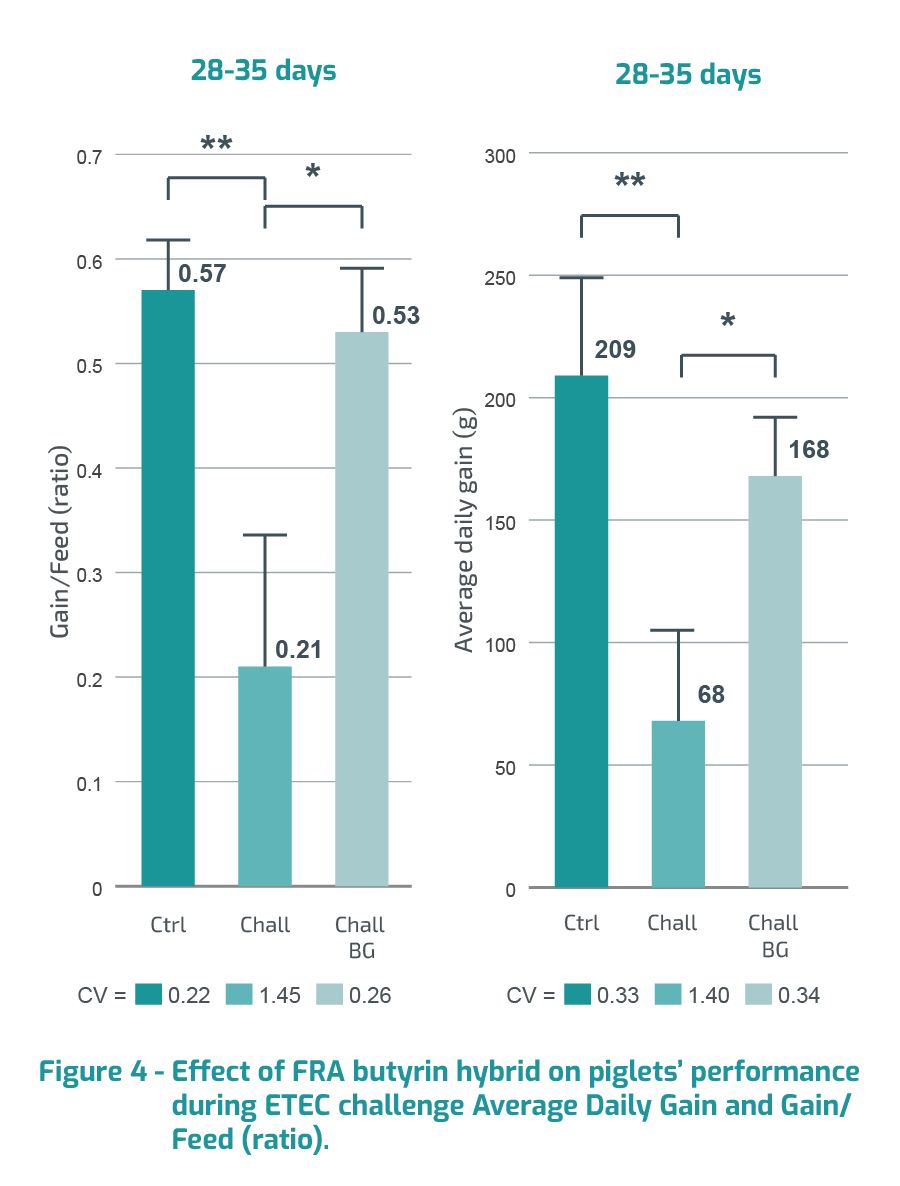
In a recent trial performed by Adisseo, FRA Butyrin Hybrid was used to compare piglets’ performance and health status when challenged with enter otoxigenic E. coli (ETEC). It was shown that challenged piglets supplemented with 2kg/ton FRA Butyrin Hybrid significantly restored the average daily gain and the gain/feed ratio after challenge (Fig.4). Additionally, mortality was reduced by 50% in this trial.
This differences in performance and mortality resulted in a ROI of 1:2.1 in favor of the supplementation of FRA Butyrin Hybrid. (Mellouk et al. 2026b). Additionally, it has been shown by Mellouk et al., (2026a) that glycerides of butyric acid (FRA Butyrin Hybrid) limit the adhesion of pathogens and make enterocytes more resistant to Clostridium perfringens toxin.
All together, these antibacterial activities support the use of butyrate-based products to increase resilience after weaning.
5. Microbiome modulation
Another important benefit of butyrate is its ability to modulate the composition and activity of the gut microbiota. By supporting a healthy anaerobic environment, butyrate encourages the growth of beneficial bacterial populations, including Lactobacillus, Bifidobacterium and other SCFA-producing bacteria, while limiting the proliferation of opportunistic pathogens such as ETEC, Clostridium and Salmonella. A balanced microbial ecosystem contributes to improved intestinal function, reduced pathogen colonization, and lower risk of PWD (Connolly et al., 2025).
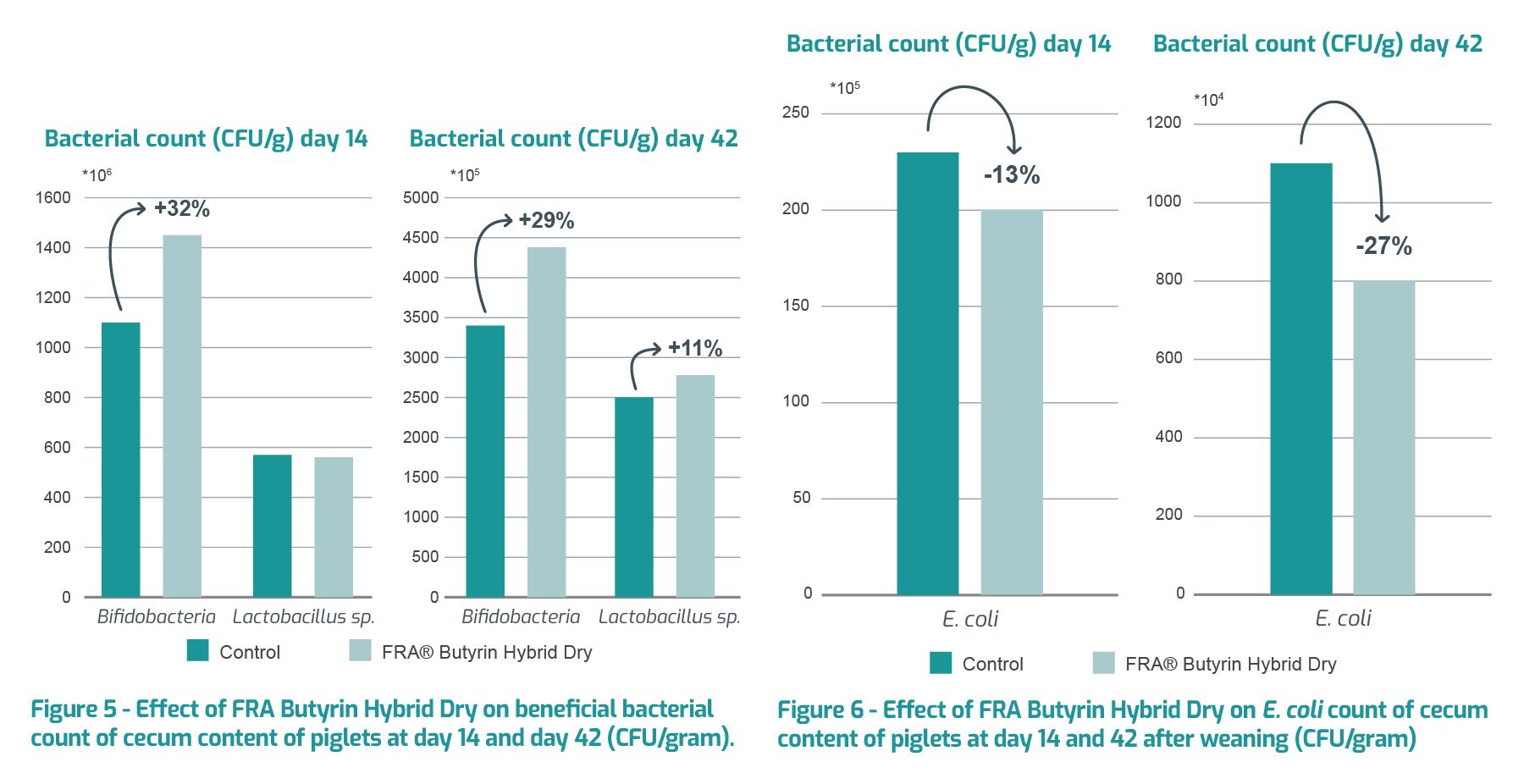
Adisseo showed the positive effects of protected butyrate on the count of beneficial bacteria, where Lactobacillus and Bifidobacterium increased with 29 and 32% respectively at 14 days after weaning (Fig. 5). Additionally, E. coli counts decreased with 13% and 27% when FRA Butyrin Hybrid was fed to piglets at day 14 and day 42 respectively (Fig. 6). These results show that FRA Butyrin Hybrid can modulate the microbiome composition, increase the beneficial bacteria and decreasing potentially harmful bacteria, improving the microbiome balance.
Conclusion
Butyrate is a multifunctional nutritional tool that directly addresses several of the key physiological challenges associated with weaning in piglets. By serving as an energy source for intestinal epithelial cells, supporting villus development, strengthening tight junction integrity, and modulating immune and microbial functions, butyrate contributes to the maintenance of intestinal homeostasis during a period of heightened vulnerability.
These complementary mechanisms help reduce intestinal permeability, limit pathogen colonization, attenuate inflammation, and lowers the incidence of post weaning diarrhea. As the swine industry continues to reduce its reliance on antibiotics and zinc oxide, butyrate-based solutions represent a scientifically validated and sustainable approach to improving gut health, resilience, and growth performance in weaned piglets, thereby supporting both animal welfare and production efficiency (Guilloteau et al., 2010; Connolly et al., 2025; Feng et al., 2018).
References
Feng W., Wu Y., Chen G., Fu S., Li B., Huang B., Wang D., Wang W., Liu, J. Sodium Butyrate Attenuates Diarrhea in Weaned Piglets and Promotes Tight Junction Protein Expression in Colon in a GPR109A-Dependent Manner. Cell Physiol Biochem 2018;47:1617-1629.
Connolly, K.R., Sweeney, T., O’Doherty J.V. Sustainable nutritional strategies for gut health in weaned pigs: the role of reduced dietary crude protein, organic acids and butyrate production. Animals 2025, 15, 66. https://doi.org/10.3390/ani15010066
Guilloteau, P., Martin, L., Eeckhaut V., Ducatelle, R., Zabielski, R., & Van Immerseel F. (2010). From the gut to the peripheral tissues: The multiple effects of butyrate. Nutrition Research Reviews, 23(2), 366–384. https://doi.org/10.1017/S0954422410000247
Rhouma M., Fairbrother J.M., Beaudry F., Letellier A. Post weaning diarrhea in pigs: risk factors and non-colistin-based control strategies. Acta Vet Scand. 2017; 59:31.
Mellouk A., Maresca M,, Canaple L., Michel V., Lemâle O., Goossens T., Consuegra J. Butyric glycerides enhance resistance of chicken enterocytes to pathogen adhesion and cytotoxicity in vitro. Vet Res Comm (2026a) 50:155
Mellouk A, Vieco-Saiz N, Lemâle O, Michel V, Gutierrez-Montes AM, Consuegra J. Dietary butyrate glycerides enhance piglet resilience to ETEC-induced Post Weaning Syndrome. Symposium on Gut Health in Production of Food Animals. Oral Presentation (2026b)
Enter your email address
Please enter your email address to access all content and download it with one login.
Related solutions
Product names and availability may vary by region, please contact your local Adisseo representative for more information.
FRA Butyrin Hybrid
FRA Butyrin Hybrid combines the benefits of glycerides of butyric acid on intestinal integrity and pathogen control in one unique concept.